Stable readout
Build reviewable longitudinal evaluation around sustained signal quality and task performance.

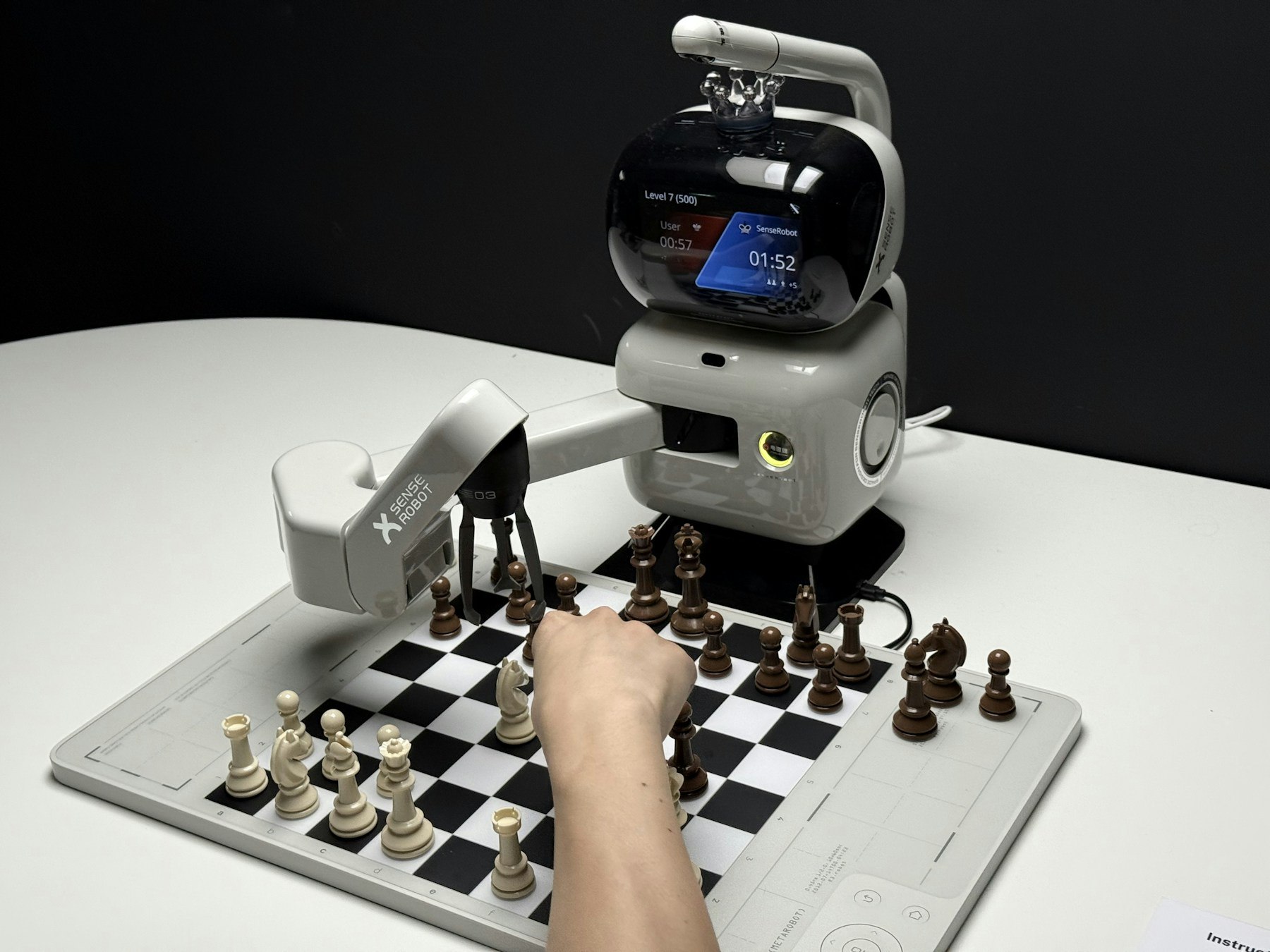 Third-party reference photograph · © Amos K
Define how technology enters research and interaction settings through clear tasks, users and evaluation criteria. These are planned applications and research directions.
Plan systems, software, tailored decoding and joint validation for research settings in universities, institutes, hospital research teams and industrial R&D organizations.
The initial direction explores how movement intention decoding and device-control outputs could connect with computers, research actuators and digital environments.
The planned interaction flow includes action permissions, confirmation, pause and undo. This public photograph shows a robotic-arm interaction, not brain control or a Duosera demonstration.
Read our interaction perspective ↗The plan connects tasks, acquisition, data quality, models and run records to identify the version and conditions behind each result.
Research priorities include data splits, quality labels, individual calibration, cross-day drift and rollback workflows.
Explore MindOS ↗Build on stable readout to study controlled sensory feedback, digital embodiment and broader forms of authorized collaboration.
Build reviewable longitudinal evaluation around sustained signal quality and task performance.
Develop independent validation methods for safety boundaries, distinguishability and task benefit.
Explore interaction with external devices and digital environments, with attention to autonomy and controllability.